Why a tiny sketch
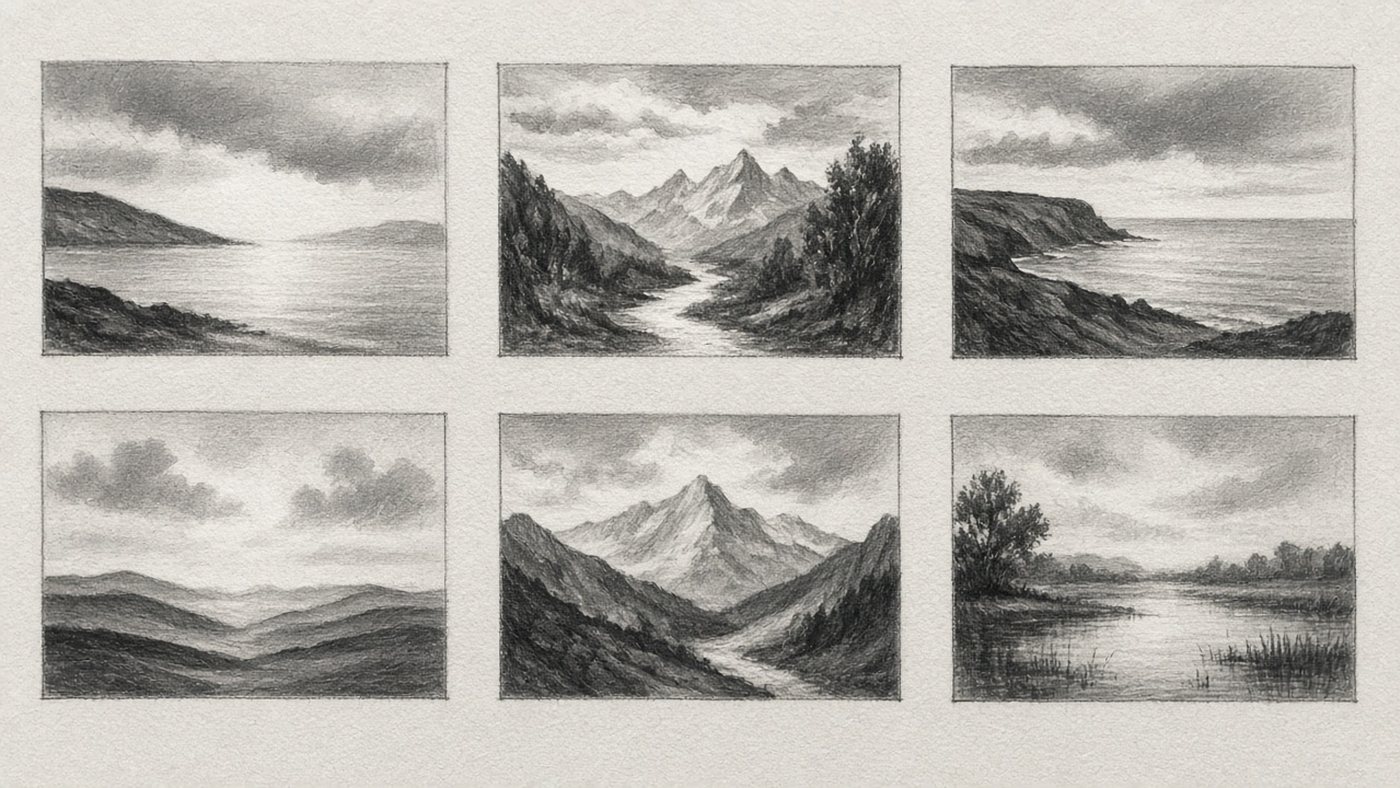
A thumbnail is a composition without vanity. On a patch three centimeters wide it is embarrassing to polish eyelashes, so the question that matters remains: where is the dark, where is the light, where should the eye go. A longer look at the frame is in composition.
Three options in five minutes
Five minutes for three rectangles. Each has the same assignment and a different horizon, or a different edge the subject is pushed against. Do not improve the first sketch three times. Three different ones beat one polished one.
A large sheet lies
On a large sheet an empty place feels like something you will fill later. In a thumbnail the hole is immediate. There is nothing for the eye to catch. You decide before an hour is spent on a good nose in a bad frame.
- Draw three frames in the proportion of the final sheet.
- In each one, close the subject with a different mass.
- Add nothing smaller than a pea.
- Put the sheet down and choose after a minute, not at once.
How to read a thumbnail
Read a thumbnail with your eyes half closed. If squinting changes nothing, there were already few shapes. That is good.
Value masses, not details
Two or three values. The light of the paper, a middle pencil, one near-black shape. Branches, windows and buttons do not fit this size. If you want a detail, the thumbnail is already too big.
Where the darkest note is
The darkest shape is the anchor. It should not sit exactly in the center unless you mean a poster. Shift it toward one intersection and check that it has not stuck to a corner. If a person is in the frame, a short pose search like gesture drawing helps beside it.
How many to draw
More than three makes sense only when the three came out identical. Otherwise you are postponing the choice.
Three, not thirty
Thirty thumbnails are a different skill, sketches for their own sake. One finished drawing needs three. Draw a fourth only when all three are plainly weak and you can say why.
How to pick one
Pick the one where a squint shows the shape at once. Not the one where “the tree will be beautiful later.” You can draw the tree in either version. The frame stays what it already is.
- Three frames, one proportion.
- Two or three values, no small parts.
- The dark shape is not dead center.
- Choose after a minute, not during the stroke.
Check
Show the thumbnail to someone for three seconds and ask where they looked. If they point at the corner of the frame instead of the subject, the mass landed in the wrong place.
Moving it to the large sheet
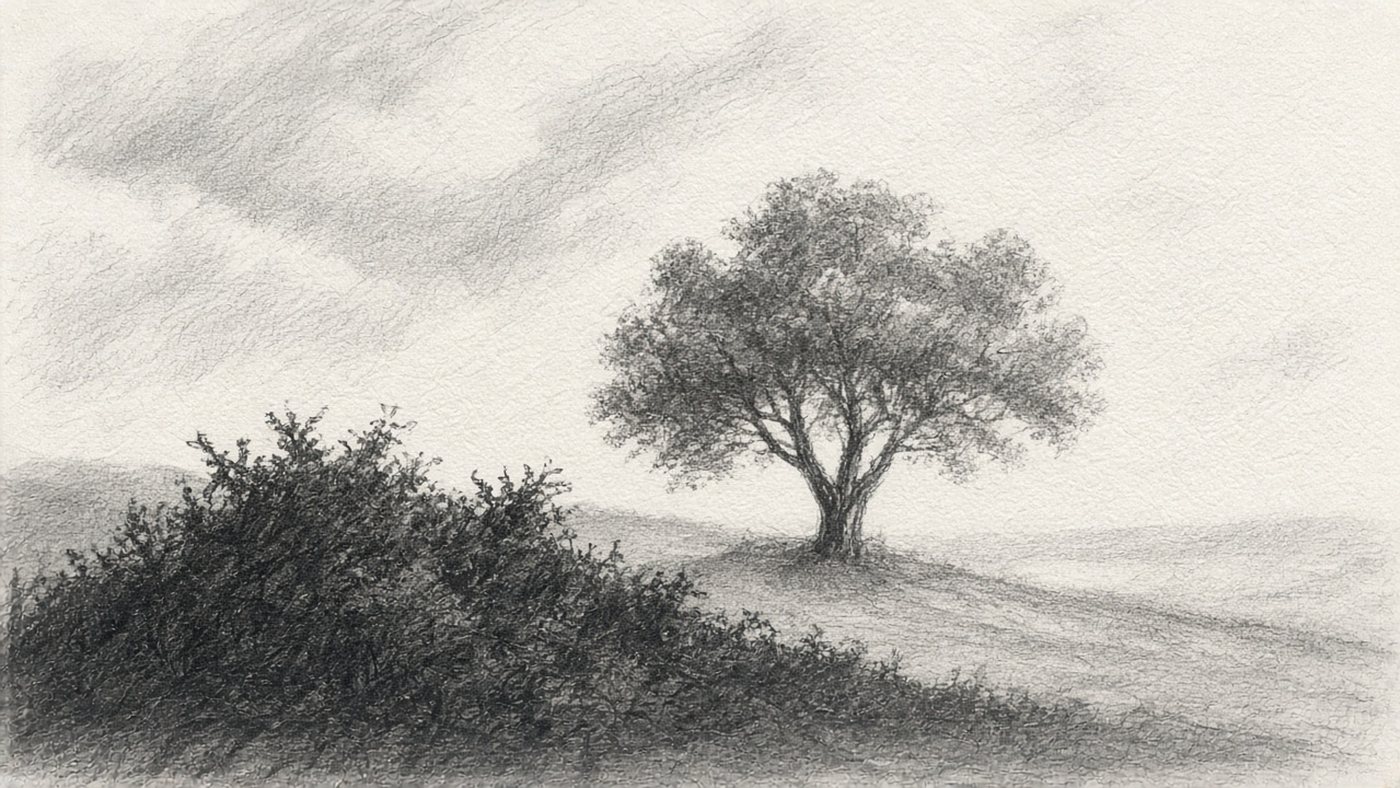
The transfer enlarges the masses. It does not tell a new story.
The same frame proportion
The final frame repeats the thumbnail. If the sketch was wide and the sheet is square, the composition is already different. First measure the same rectangle on the large sheet and cover the rest with paper.
Do not add a new subject
On the large sheet you want to add a dog, a window, a second tree. Do not, until the three masses sit where they belong. A new mass changes the choice you already made. Detail inside a mass is fine. A fourth mass is a fifth thumbnail, and it should have been decided at the small size.
Time to draw, not just read
Theory fades in a couple of days if you never use it. Open the editor and spend 15 minutes on what you just read. That is enough for the skill to stick.
Try it now
A free online editor: brushes, layers, a palette, and a shared canvas. No install and no sign-up.
Start drawingTopics in this guide
- thumbnail sketch
- composition thumbnail
- value masses
- how to choose a composition
- small sketch before a drawing
← How to draw feet and simple shoes A three-color study: how to stay out of the mud →