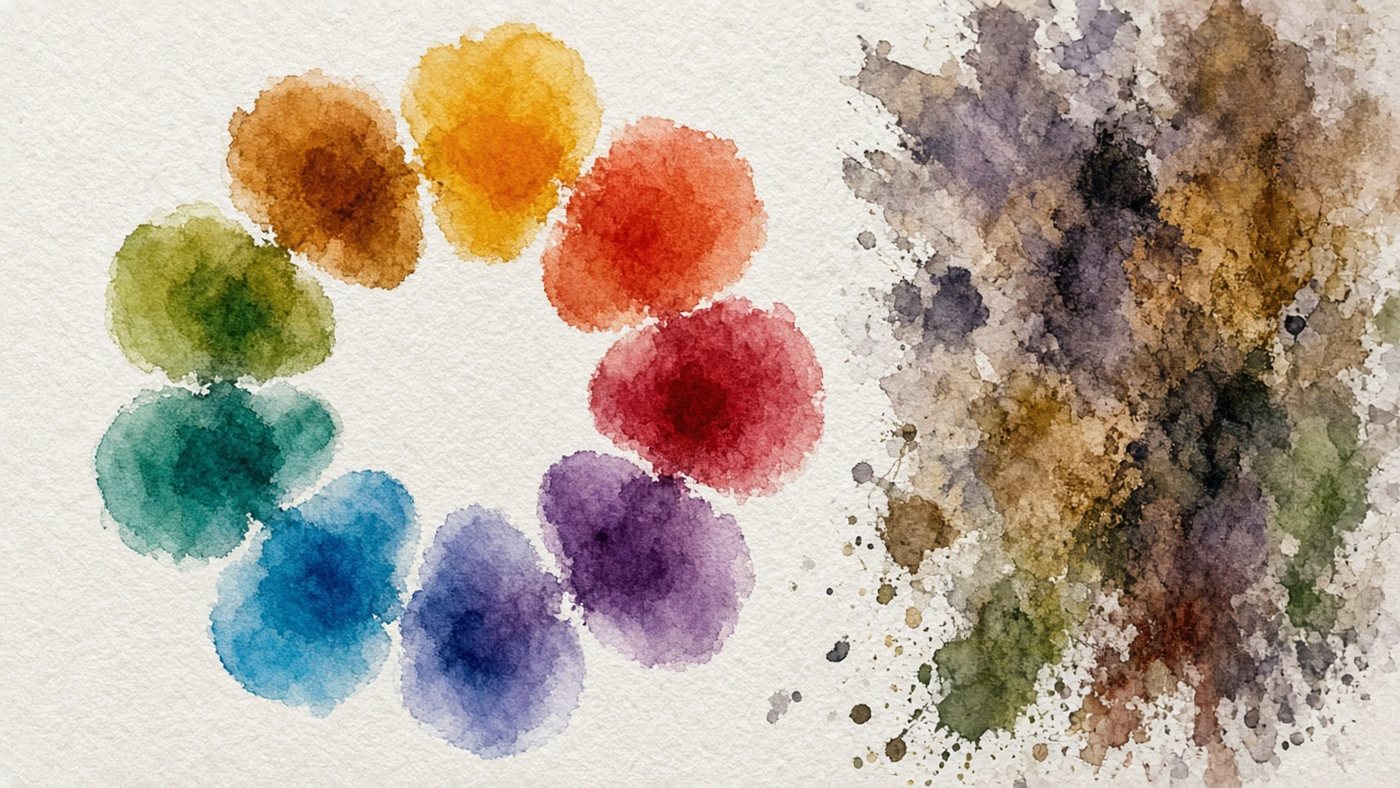
What you are thinning
Water in watercolour is the paint: more water, a lighter wash. In acrylic, oil and gouache, water or solvent only spreads paint that is already made. Mix those two stories up and the layer either runs or dries to chalk.
Water and medium are not the same
Water thins. An acrylic medium thins and still leaves the binder that holds the film. Oil solvent smells like a studio and evaporates, and it is not tap water. Do not wash acrylic brushes in it “while you are there”. Each binder has its own thinner.
A test on a scrap
The amounts below are a start, not a recipe for every tube. Pigments differ: a cadmium is already paste, some umber already pours. On an offcut of the same paper, or on the edge of the canvas, mix a spoon of paint and see whether the stroke stays a ribbon or breaks into drops.
- Thick means paint from the tube, almost no thinner.
- Medium means an even stroke, with the brush mark still visible.
- Thin means the paint runs off the brush. That is a wash, not a body of colour.
Acrylic
Acrylic forgives speed and does not forgive a puddle. It dries fast, so add water to the paint on the palette, not into the open tube.
Thick, medium, thin
For 10 ml of acrylic, three steps are enough to start. A thick coat gets no water. A medium mix gets about 1.5 ml of water, which is 15%. A thin mix gets about 3.5 ml, which is 35%. Wipe the brush between steps, or the next test is already an unknown thickness.
When water starts to hurt
Past about 30% plain water, the acrylic film weakens: a dried stroke can rub off, or it sits dusty. If you need a transparent glaze, use acrylic medium, not a second spoon of water. Check the colour next to its neighbour anyway. How neighbouring colours change each other is in colour theory for beginners.
- Squeeze a little paint onto the palette and close the tube.
- Add water with the tip of the brush, not with a glass.
- Pull a stripe on a scrap and give it a minute: wet shine lies.
Oil and gouache
Do not thin oil with water. Do thin gouache with water, but sparingly: it needs to cover, not to pretend it is watercolour.
Oil and solvent
For 10 ml of oil, a medium mix is about 2 ml of solvent (20%), a thin mix about 4 ml (40%). Early layers of a painting are usually leaner, later layers fatter. Pour solvent into the final stroke and the surface goes matte and brittle. Do not carry oil brushes into the acrylic jar.
Gouache likes little water
For 10 ml of gouache, the medium step is about 2.5 ml of water, the thin step about 4.5 ml. Any thinner and the paint stops covering the colour under it, and a second pass lifts that colour. White in that soup turns grey. A second thicker pass beats one watery puddle if you want a flat shape.
How light a layer looks is not only about water. You still have to check the value you mixed. That is the article on light and shade.
How not to kill the layer under it
Thin paint over a layer that is still wet is the usual way to get mud where you planned glass.
Wait, then cover
A thin acrylic layer is often ready in half an hour. A thick stroke takes longer. Thin oil can take a couple of days. While the lower layer still sticks to a finger, a new stroke lifts it. How much paint to allow for the area is a separate count in how much paint a canvas needs: a thin layer uses fewer millilitres, and it still does not replace a covering coat.
Add thinner to measured paint on the palette. Do not pour it into the tube or into the jar of clean water.
Dirty water
One jar turns grey fast, and every “clean” mix drags that grey along. Keep two: rinse the brush in one, take water for the paint from the other. It shows most in watercolour. A wash gets lighter only with clean water, not with the jar that already holds yesterday’s cobalt.
Frequently asked questions
Do these amounts apply to watercolour too?
No. In watercolour, water is the medium: more water, a lighter wash. The calculator ratios are for acrylic, oil and gouache, where you can wash the binder out.
What if there is no medium?
A drop of water is enough for thick and medium acrylic. For a thin glaze, wait for medium. A lot of plain water weakens the film.
Time to draw, not just read
Theory fades in a couple of days if you never use it. Open the editor and spend 15 minutes on what you just read. That is enough for the skill to stick.
Try it now
A free online editor: brushes, layers, a palette, and a shared canvas. No install and no sign-up.
Start drawingTopics in this guide
- how to thin paint
- acrylic and water
- acrylic medium
- oil solvent
- gouache and water
← Two characters in one frame How much paint a canvas needs →